
Sustainability in tourism is shaped by many choices throughout a journey: how travellers move, the experiences they take part in, the businesses involved, and how tourism contributes to local communities. At ASEV Travel, our approach is not only about making commitments. It is about taking action and measuring the concrete results of those actions across our operations.
Our 2025 sustainability metrics across Vietnam, Cambodia and Laos provide that measurable picture. They track four key areas: refillable bottles, cultural and heritage activities, lower-emission transportation and sustainable suppliers. Alongside these indicators, contributions made possible by our partners and their travellers supported local initiatives across all three countries.
And in 2026, our sustainability journey reached two major milestones.
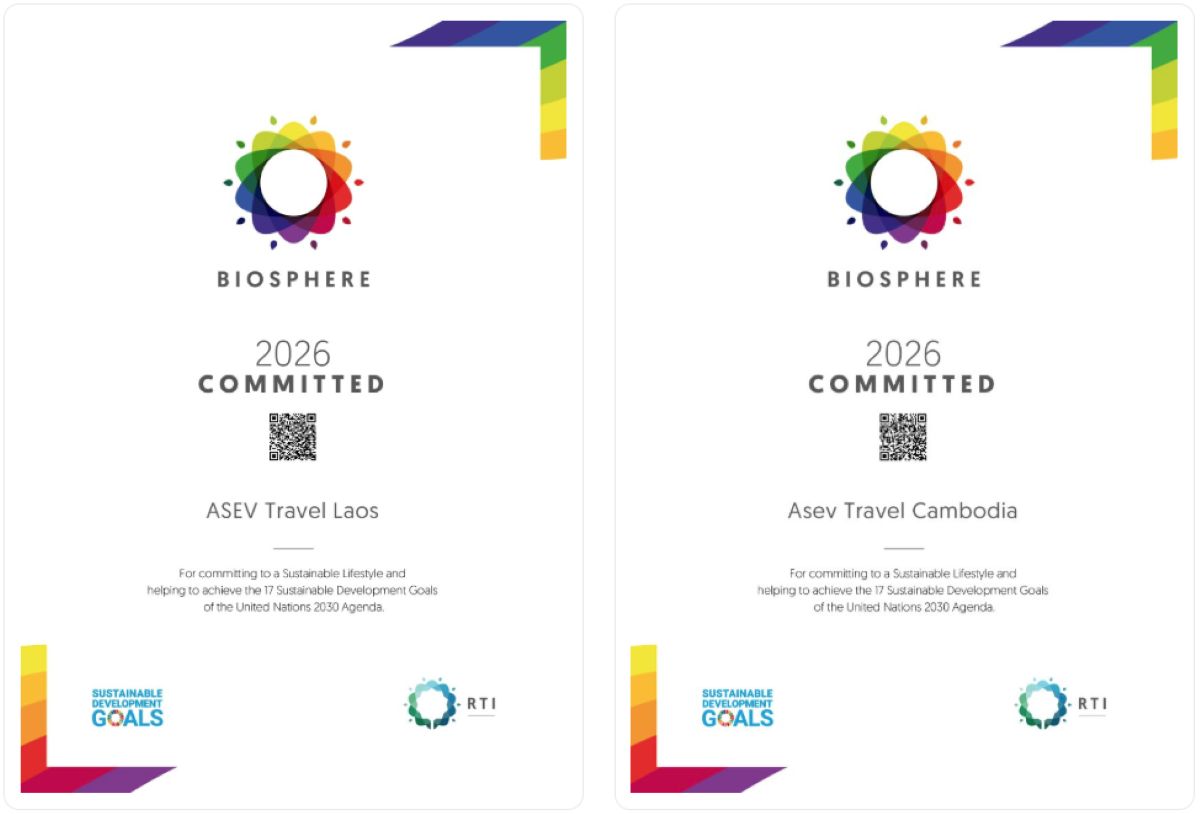
ASEV Vietnam achieved Travelife Certified status, while ASEV Laos and ASEV Cambodia achieved Biosphere Committed recognition.
These external recognitions mark an important step forward for our teams and reinforce the work already underway across our three destinations. Later in this article, we look more closely at what each recognition means and where our sustainability journey goes next.
Our 2025 Sustainability Metrics at a Glance
In 2025, we measured four key indicators across our operations in Vietnam, Cambodia and Laos, providing a country-by-country view of the concrete results achieved.
| 2025 Sustainability Metric | Vietnam | Cambodia | Laos |
| Passengers receiving refill bottles | 1.6% | 24.7% | 53.1% |
| Activities – culture & heritage | 41.9% | 48.6% | 50.1% |
| Lower-emission transport | 31.3% | 48.8% | 53.0% |
| Sustainable suppliers | 4.6% | 2.5% | 3.6% |
The differences between our three destinations are significant – and they are an important part of the picture. Tourism infrastructure, transportation networks, available suppliers and local operating conditions vary considerably between Vietnam, Cambodia and Laos.
This is why we measure each country individually rather than relying on one overall figure. It allows us to show the results achieved in each destination and establish a clear reference point against which we can measure our progress over time.
Keeping Culture and Heritage at the Heart of Travel
Culture and heritage remain at the heart of many of the experiences we design. In 2025, 50.1% of activities in Laos were linked to culture and heritage, compared with 48.6% in Cambodia and 41.9% in Vietnam.
From traditional crafts and local cuisine to history and living traditions, these experiences give travellers opportunities to connect more meaningfully with a destination while supporting the people who preserve, practise and share its heritage.
Making Transportation Part of the Sustainability Conversation
How travellers move through a destination is also part of how we design our itineraries. In 2025, lower-emission transport represented 53% of transportation measured in Laos, compared with 48.8% in Cambodia and 31.3% in Vietnam.
Depending on the destination and itinerary, alternatives to conventional road transfers can include trains, bicycles, cyclos and boats, among other options. Geography, infrastructure, accessibility and traveller needs mean these alternatives are not suitable for every journey, but where they are, transportation can become part of the travel experience itself.
Refillable Bottles: Different Stages of Progress Across Our Destinations
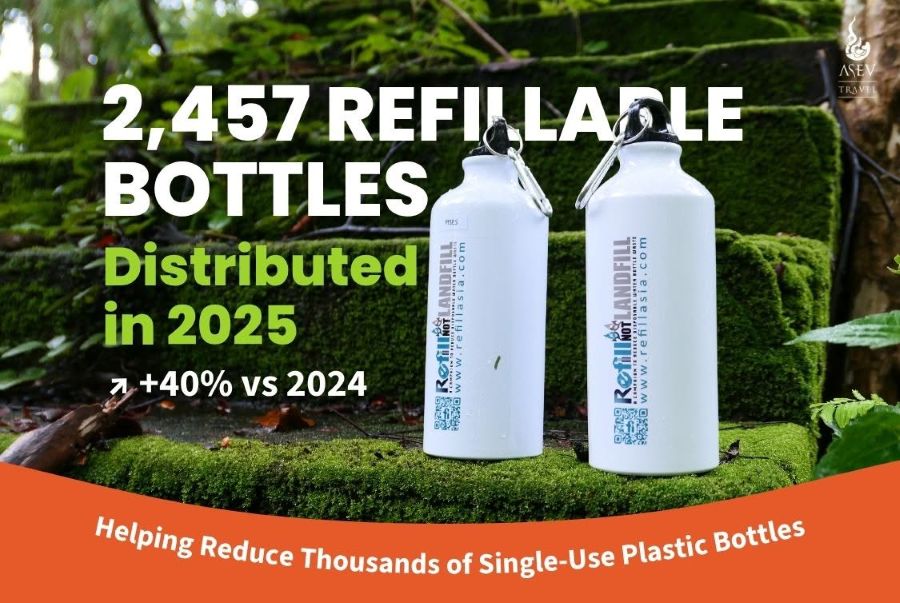
Refillable bottle solutions are already well established within our operations in Laos and Cambodia. In 2025, 53.1% of passengers in Laos received refillable bottles, followed by 24.7% in Cambodia.
In Vietnam, where implementation is only beginning, the figure stood at 1.6%. This gives us a clear starting point as we work to expand refillable bottle solutions and reduce reliance on single-use plastic across more of our programmes.
Sustainable Suppliers: Building on a Measurable Foundation
Every itinerary relies on a network of hotels, guides, transport providers, restaurants and other local partners. Working with suppliers that share responsible practices is therefore an important part of strengthening sustainability throughout our programmes.
In 2025, 4.6% of suppliers measured in Vietnam were classified as sustainable suppliers, compared with 3.6% in Laos and 2.5% in Cambodia.
These results give us a first measurable foundation on which to build. As more suppliers develop and demonstrate responsible practices, we can continue engaging with our partners and integrating sustainability more closely into our supplier selection, with the aim of steadily increasing these figures across all three destinations.
Giving Back to the Communities Behind Our Journeys
Our sustainability measurements look at how tourism is operated, but responsible tourism also raises another question: how can tourism contribute to the destinations that make these journeys possible? In 2025, contributions made possible by our partners and their travellers supported three organisations and initiatives across Cambodia, Laos and Vietnam.
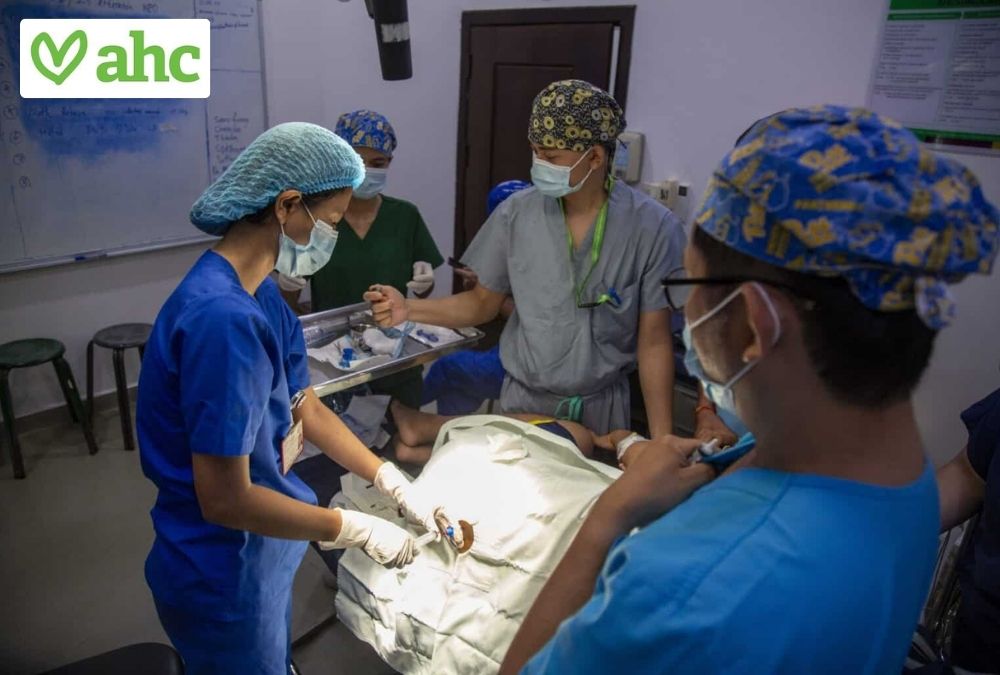
Cambodia: USD 1,061 for Angkor Hospital for Children
In Cambodia, USD 1,061 was donated to Angkor Hospital for Children, supporting its work providing free, high-quality healthcare for children.
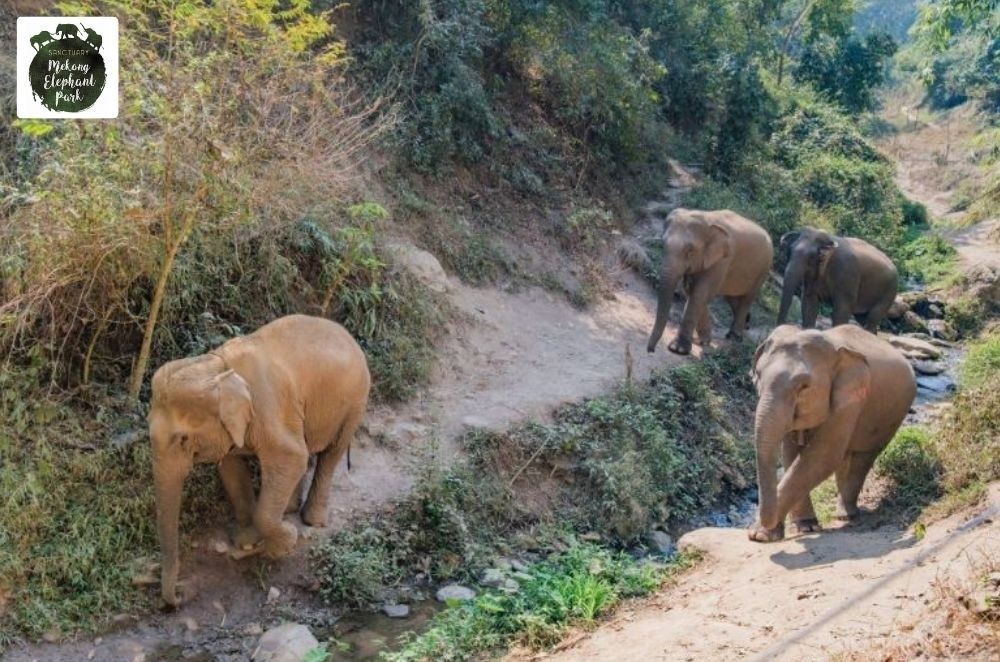
Laos: USD 1,675 for Mekong Elephant Park
In Laos, USD 1,675 was donated to Mekong Elephant Park, contributing to elephant welfare and sustainable livelihoods connected with responsible tourism.
Vietnam: USD 504 for KOTO
In Vietnam, USD 504 was donated to KOTO, supporting hospitality training and career opportunities for disadvantaged young people.

Together, these contributions amounted to USD 3,240 in 2025. Each initiative addresses a different local need, but together they reflect an important part of our approach: tourism should have the potential to create positive value beyond the immediate traveller experience. Community contributions alone do not make tourism sustainable. But alongside responsible operations, local partnerships and better supply-chain practices, they can form part of a broader effort to ensure tourism contributes more positively to the places in which it operates.
From Measuring Our Progress to External Recognition
Measuring our own actions gives us a concrete view of our progress. External assessment takes this a step further, by evaluating our sustainability practices against recognised frameworks and providing independent validation of the work being carried out.
In 2026, this work reached major milestones across our three core destinations: ASEV Vietnam achieved Travelife Certified status, while ASEV Laos and ASEV Cambodia achieved Biosphere Committed recognition.
Travelife and Biosphere use different frameworks and recognition systems and should therefore not be considered equivalent certifications. What they share is a structured approach based on commitments, concrete actions, supporting evidence, independent assessment and continuous improvement.
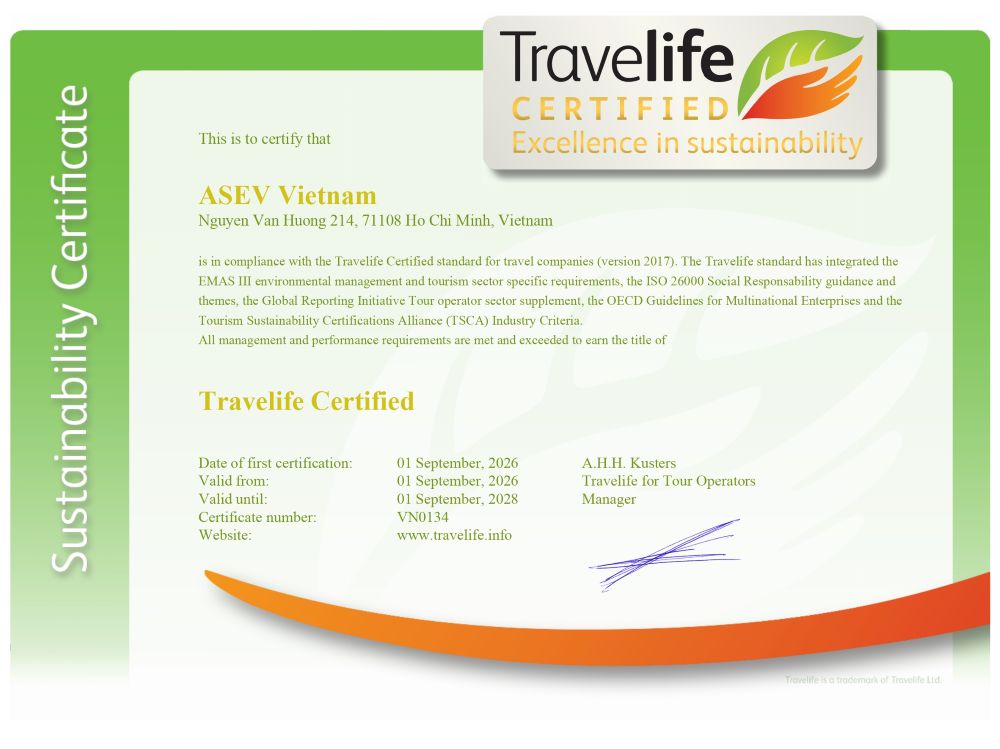
Vietnam: ASEV Travel Achieves Travelife Certified
On 3 September 2026, ASEV Vietnam achieved Travelife Certified status, the highest level of the Travelife sustainability certification programme for tour operators and travel agents.
This recognition follows an independent, third-party audit against more than 200 criteria covering sustainability management, office operations, product development, relationships with suppliers and business partners, and customer communication. The Travelife standard addresses a broad range of environmental and social responsibility areas, including biodiversity, human rights and labour relations.
Achieving Travelife Certified is an important recognition of ASEV Vietnam’s long-term commitment to social and environmental sustainability and a major milestone for our team. It validates the progress made so far while providing a framework through which we can continue strengthening our practices over time.
Laos & Cambodia: Biosphere Committed
ASEV Laos and ASEV Cambodia have reached an important milestone through Biosphere Committed recognition, the first recognition level within the internationally recognised Biosphere sustainability programme. This recognition reflects our commitment to integrating sustainability throughout our operations through a structured management system, continuous improvement and responsible tourism practices that consider environmental, social, cultural and economic impacts. Our commitments and actions have also been independently validated through a third-party assessment.
Being Committed means the journey continues. Maintaining this recognition requires ongoing progress and regular external verification, while providing a foundation for working towards Biosphere Certified, the programme’s highest recognition level. More information about our sustainability commitments in Laos and Cambodia is available through official Biosphere profile.
Three Countries, Different Results, One Direction
Our 2025 results make one thing particularly clear: progress does not look the same everywhere.
Each of our destinations operates within a different tourism environment, with its own infrastructure, suppliers and opportunities. The results therefore vary from one country to another – as do the areas in which each team is currently most advanced.
What matters is being able to measure these differences transparently and follow their evolution over time. Our 2025 figures give us that reference point, while the external recognition achieved in 2026 adds independent validation to the work being carried out across our destinations.
Vietnam, Cambodia and Laos may be progressing through different frameworks and at different stages, but the direction is shared: continuing to make responsible tourism more measurable, structured and embedded in the way we operate.
What Comes Next?
Our 2025 results give us a measurable baseline from which to continue building. Priorities include expanding our network of sustainable suppliers, increasing refillable bottle solutions where implementation is still at an early stage, and continuing to integrate appropriate lower-emission transportation options into our programmes.
The external recognition achieved in 2026 also brings the next steps into focus. In Vietnam, Travelife Certified provides a framework for continuing to strengthen our sustainability practices. In Laos and Cambodia, maintaining Biosphere Committed recognition means continuing to demonstrate progress, with Biosphere Certified representing the next level towards which we can work.
Across all three destinations, we will continue to measure our actions and follow their evolution over time. Responsible tourism is not a finished achievement, but an ongoing process of taking action, measuring results and continuing to move forward.
Building More Responsible Journeys Together
As a local DMC, ASEV Travel connects international travel partners with the hotels, guides, transportation providers, communities and experiences that shape journeys across Southeast Asia. This gives us an opportunity to integrate more responsible choices into the way those journeys are designed and operated.
Our 2025 results and the recognition achieved in 2026 mark important steps in that journey. The next one is to keep building on them – together with our teams, suppliers and travel partners.
Interested in developing more responsible programmes in Vietnam, Cambodia or Laos? Contact ASEV Travel to discuss your next Southeast Asia itinerary.