
For many travelers, Ha Giang means the Ha Giang Loop, a multi-day road journey through northeastern Vietnam’s most dramatic mountain scenery. But a vehicle is not the only way to experience the province. Trekking in Ha Giang takes travellers off the main roads and into rice terraces, limestone valleys, forests, farmland and villages that are experienced very differently on foot.
This guide explores the main Ha Giang trekking and hiking areas, how walking can be combined with the Ha Giang Loop, what to expect on the trails, and how the experience compares with trekking in Sapa.
Why Trek Ha Giang When You Can Do the Ha Giang Loop?
The Ha Giang Loop is one of the most popular ways to explore the province. Travelling by motorized vehicle allows visitors to cover long distances between places such as Quan Ba, Yen Minh, Dong Van, Meo Vac and Du Gia, stopping at mountain passes, viewpoints, villages and other attractions along the way.
Trekking offers a different perspective. Instead of moving between destinations primarily by road, travellers spend several hours or days exploring a particular valley, mountain area or group of villages. Walking routes can pass through rice terraces, farmland, forests and smaller paths, allowing visitors to experience landscapes beyond the main roads.
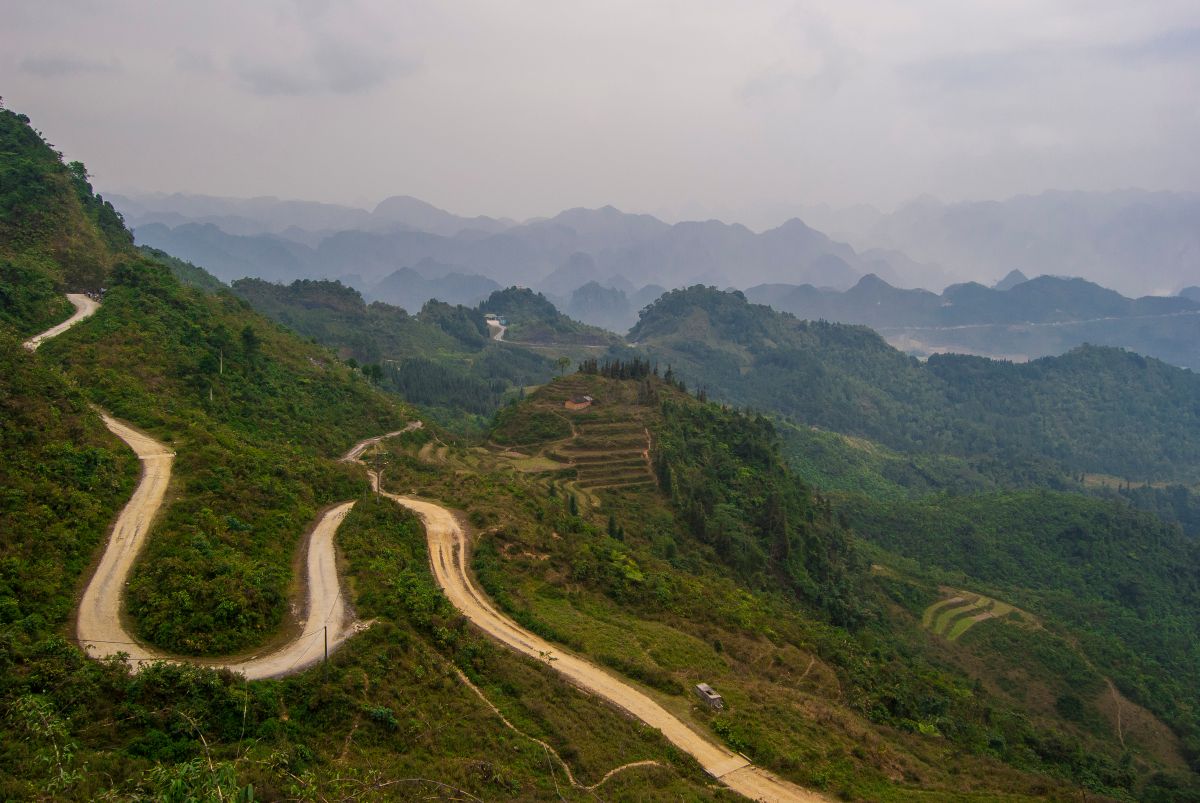
Trekking does not have to replace the Ha Giang Loop. Depending on travellers’ interests, available time and fitness levels, there are several ways to combine or approach these experiences:
- Loop + short hikes: Add village, valley or mountain walks around Quan Ba, Dong Van, Meo Vac or Du Gia while travelling along the Loop.
- Dedicated trekking: Spend several days exploring Hoang Su Phi, with its rice terraces, villages and homestays as the main focus.
- Mountain trekking: Choose a more demanding ascent to Chieu Lau Thi Peak or Tay Con Linh Peak, suited to travellers with good fitness and mountain trekking experience.
For many itineraries, combining road travel and walking offers a practical balance. The Loop connects Ha Giang’s major destinations, while trekking allows travellers to explore selected areas in greater depth.
Where to Go Trekking in Ha Giang
There is no single “Ha Giang trek.” Hiking experiences vary considerably across the province, from gentle village walks and rice terraces to rocky limestone landscapes and demanding mountain ascents. The right destination depends on travellers’ interests, fitness levels and available time.
Trail conditions also differ by area. Routes may follow farmland, stone paths, forest tracks or steep mountain slopes, with rain making some sections muddy and slippery. In more remote areas, access to food, water and accommodation can be limited, making advance planning particularly important for longer treks.
Quan Ba: An Accessible Introduction to Hiking in Ha Giang
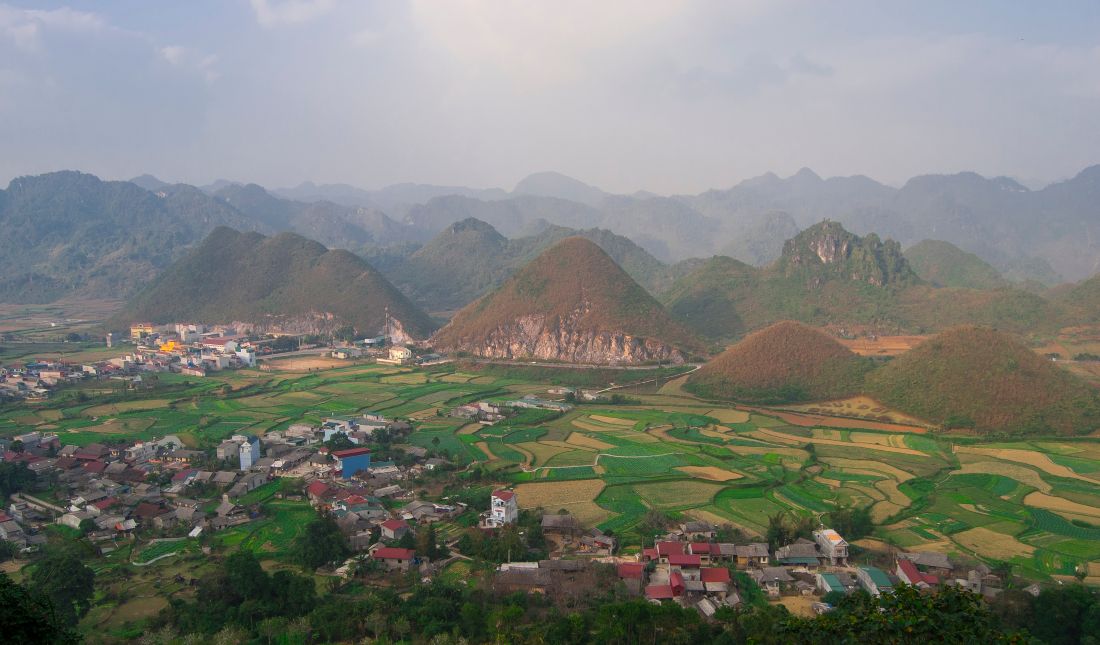
Quan Ba works well for travellers who want to include walking without committing to a demanding trek. Routes around rural communities such as Nam Dam can pass through farmland, valleys and village landscapes, while longer walks can explore the surrounding countryside and mountain areas.
- Duration: A few hours to a full day
- Difficulty: Easy to moderate depending on the route
- Best for: Beginners, village walks and travellers with limited trekking time
- Why go: An accessible way to introduce hiking into a wider Ha Giang journey
Dong Van and Meo Vac: Hiking Through the Karst Plateau
Trekking around Dong Van and Meo Vac looks very different from Hoang Su Phi. The landscape is dominated by limestone mountains, rocky farmland, deep valleys and highland villages rather than continuous rice terraces.
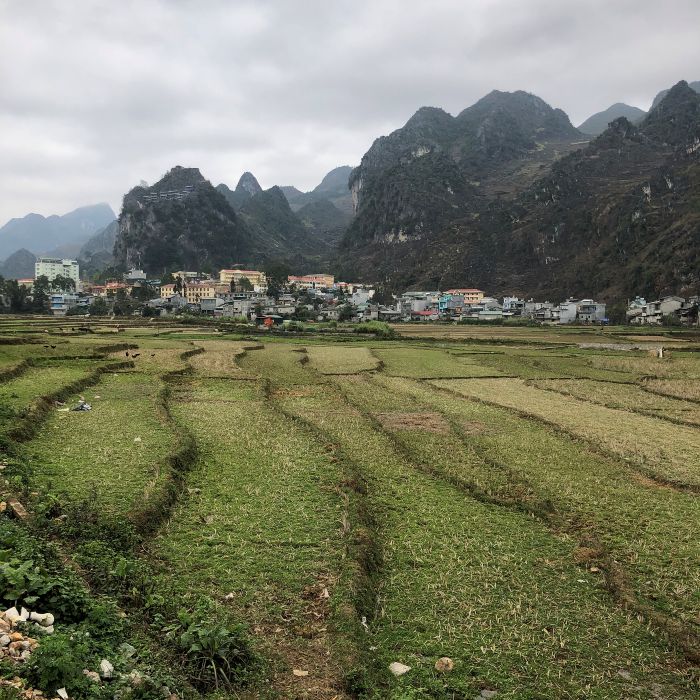
There is no single standard trekking route. Depending on the programme, travellers can take shorter walks around villages and valleys or spend longer exploring sections of the Dong Van Karst Plateau on foot. This makes the area particularly suitable for adding hiking to a Ha Giang Loop journey.
- Duration: A few hours to full-day or longer walks
- Difficulty: Easy to challenging depending on the route
- Best for: Karst landscapes, highland villages and combining hiking with the Ha Giang Loop
- Why go: Walking provides a closer look at the limestone landscape beyond the roadside viewpoints
Hoang Su Phi: Rice Terraces and Multi-Day Trekking
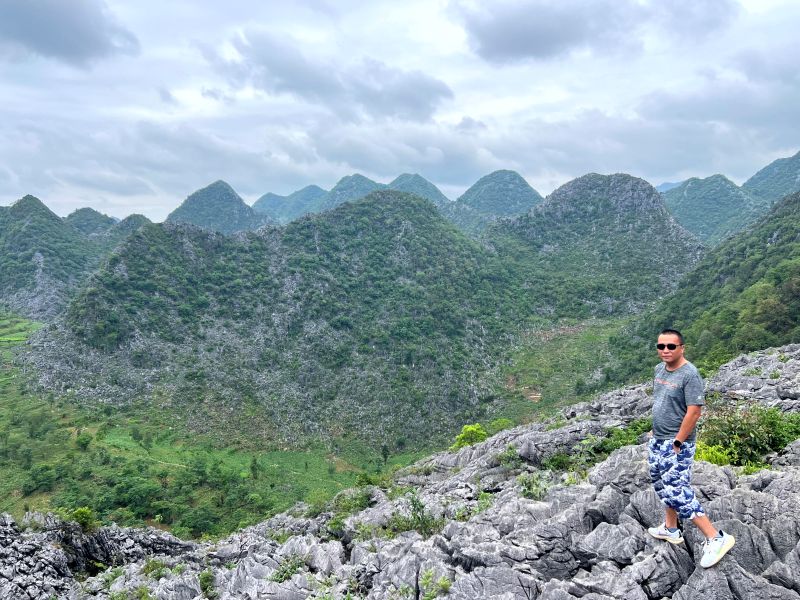
In western Ha Giang, Hoang Su Phi is one of the strongest choices for dedicated trekking. Walking routes cross extensive rice terraces, forests, streams and rural villages, with programmes ranging from shorter walks to multi-day journeys.
Rather than following one standard trail, itineraries can connect different villages and landscapes around areas such as Thong Nguyen, Nam Hong and Ban Phung. Overnight programmes can also incorporate homestays, allowing travellers to continue walking between different communities over several days.
- Duration: Half day to several days
- Difficulty: Moderate to challenging depending on the route
- Best for: Rice terraces, rural landscapes and multi-day trekking
- Why go: One of the best choices in Ha Giang when trekking itself is a major part of the journey
Hoang Su Phi lies away from much of the classic Ha Giang Loop, so it generally needs to be planned as a deliberate part of the itinerary rather than added as a quick stop along the Loop.
Du Gia: Green Valleys and Countryside Walks
Du Gia offers another side of Ha Giang, with green valleys, rice fields, forested hills, rural villages and waterfalls. Short countryside walks can be incorporated naturally into a Loop itinerary, particularly for travellers who want time away from the road without undertaking a serious mountain trek.
Routes are less standardised than in established trekking destinations, so distance and difficulty depend on the villages and trails included.
- Duration: A few hours to a full day
- Difficulty: Easy to moderate depending on the route and conditions
- Best for: Countryside walks and Loop + hiking programmes
- Why go: A greener rural contrast to the rocky landscapes around Dong Van and Meo Vac
Chieu Lau Thi Peak: A Higher-Altitude Trek
For fit travellers looking for something beyond village and valley walking, Chieu Lau Thi Peak offers a higher-altitude trekking experience in the Hoang Su Phi area. Part of the Tay Con Linh mountain range, the route climbs through mountain and forest landscapes towards a summit above 2,400 metres, with cloud and mist often becoming part of the experience.
- Duration: Commonly 2 days / 1 night for organised trekking programmes
- Difficulty: Challenging
- Best for: Fit travellers looking for a mountain ascent
- Why go: A summit-focused experience that is considerably more demanding than shorter village walks
Tay Con Linh Peak: For Experienced Mountain Trekkers
Tay Con Linh Peak sits at the more demanding end of Ha Giang trekking. Rising above 2,400 metres within the Tay Con Linh mountain range, the peak lies in a remote mountainous area between Vi Xuyen and Hoang Su Phi. Trekking routes involve forest terrain, significant elevation gain and considerably longer walks than typical village treks.
Routes and itineraries vary, but organised treks generally require multiple days and are better suited to travellers with previous hiking experience and good fitness.
- Duration: Multi-day
- Difficulty: Hard
- Best for: Experienced hikers and travellers specifically seeking a mountain expedition
- Why go: Remote forest, high-altitude terrain and a much more demanding trekking experience
Homestays and Village Life in Ha Giang
Homestays can be an important part of Ha Giang trekking, particularly on overnight and multi-day routes. Ha Giang is home to H’mong, Dao, Lo Lo, Tay and Nung communities, among others, so the cultural experience varies considerably depending on the area and villages included in the itinerary.
What to expect:
- Accommodation: Homestays range from traditional family-run houses with shared facilities to more comfortable properties with private rooms and bathrooms. Standards vary by location and property.
- Meals: Home-cooked meals are commonly included in overnight homestay programmes, with dishes and ingredients varying by area and household.
- Cultural experience: Different trekking areas pass through different communities, making villages, architecture, food and local traditions part of the journey.
A homestay is not the only option. Travellers who prefer more privacy, comfort or familiar facilities can stay in hotels, resorts or lodges where suitable options are available. The choice depends on the trekking route, location and expected comfort level, and accommodation can be planned around the walking programme rather than making a homestay compulsory.
If you are unsure which type of accommodation would be most suitable, or would like recommendations for homestays, hotels or resorts in Ha Giang, feel free to contact us. ASEV Travel can advise on suitable options according to the itinerary, location, traveller profile and expected level of comfort.
Best Time for Trekking in Ha Giang
The best time for trekking in Ha Giang depends on the landscapes you want to experience. Rice terraces, seasonal flowers and mountain conditions change throughout the year, with seasonal highlights based on guidance from Vietnam Tourism and other Vietnamese tourism sources.
May–June: Watering Season in Hoang Su Phi
The watering season (mùa nước đổ) in Hoang Su Phi generally begins with the arrival of early summer rains. During this period, water fills the terraced fields, creating mirror-like surfaces that reflect the sky across the mountainsides. Exact timing can vary with rainfall and local planting schedules.
September–October: Rice Harvest Season
September and October bring some of the most attractive rice-terrace scenery to Hoang Su Phi. The terraces gradually shift from green to gold as harvest approaches, although exact timing varies between villages and from year to year.
October–December: Buckwheat Flower Season
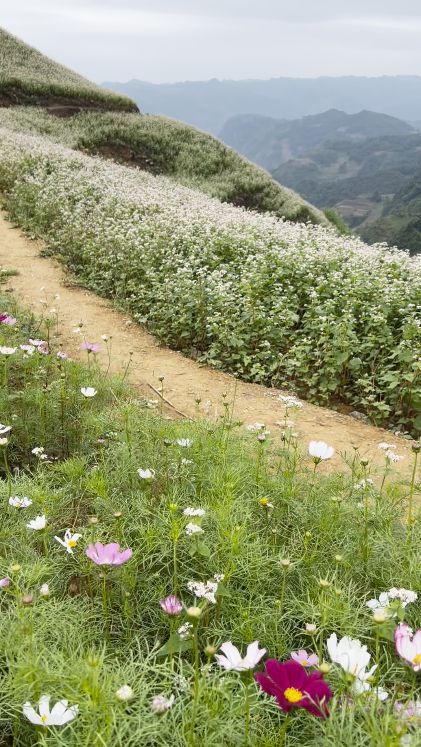
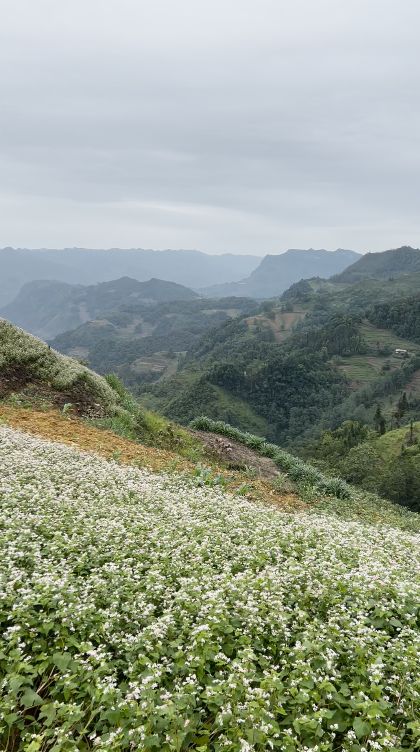
Buckwheat flowers are one of Ha Giang’s signature seasonal sights, particularly across the Dong Van Karst Plateau. Blooms can begin appearing from late September, shifting from white to pink through October and November before developing deeper shades later in the season. For travellers visiting specifically for the flowers, late October and November are generally the strongest period to consider.
December–February: Cold Mountain Conditions
Winter brings lower temperatures to Ha Giang, particularly at higher elevations. Mist and low cloud can affect visibility. Hikers planning high-elevation treks should pack warm layers and allow flexibility in their itineraries.
June–August: Warm and Wet Monsoon Season
Summer is warm and humid, with heavier monsoon rainfall, particularly in July and August. While trekking is still possible, trails can become muddy and slippery, and heavy rain may affect travel through mountainous areas. Greater schedule flexibility is recommended for summer treks.
What to Wear and Bring
What travellers need depends heavily on the chosen route. For shorter village and valley walks, comfortable shoes with good grip, lightweight layers, rain protection, sun protection and water are usually the main essentials.
For longer or higher-altitude treks, proper hiking footwear, warmer layers, a waterproof jacket and a suitable backpack become more important. Trekking poles can also be useful on steep or muddy terrain. Travellers joining an overnight or multi-day programme should check what equipment, meals and luggage arrangements are already provided before packing additional gear.
How Many Days Do You Need for Ha Giang Trekking?
The amount of time needed depends primarily on how important trekking is within the Ha Giang journey.
- A few hours: Add a village or countryside walk to a Ha Giang Loop itinerary.
- 1 day: Explore one area more substantially without making trekking the focus of the entire journey.
- 2–3 days: Suitable for village-to-village trekking, homestay experiences and some mountain programmes.
- Several days: Better when trekking is one of the main reasons for visiting Ha Giang or when undertaking a remote mountain route.
For agencies designing Ha Giang programmes, walking distance and difficulty can be adapted to the traveller profile rather than using the same trekking programme for every client.
Ha Giang or Sapa for Trekking: What Is the Difference?
Both Sapa and Ha Giang offer mountain landscapes, rice terraces, villages and opportunities for trekking, but they work very differently as travel destinations.
Sapa: A More Established Trekking Destination
Sapa is easier to approach as a dedicated trekking destination. Many of its well-known walking areas are concentrated around Sapa town and the Muong Hoa Valley, with routes connecting villages such as Lao Chai, Ta Van and Ta Phin.
Travellers can arrive in Sapa specifically to trek and choose from short walks, full-day routes and multi-day programmes without travelling large distances between each trekking area. This makes Sapa particularly practical when trekking is the main focus of a relatively short mountain stay.
For readers who want to explore Sapa’s trekking options in more detail, see our complete guide: Trekking in Sapa: Best Routes, Homestays and Practical Tips.
Ha Giang: A Larger Journey with Trekking Along the Way
Ha Giang is much more geographically spread out. There is no equivalent of one central trekking valley. Instead, different parts of the province provide different experiences: rice terraces in Hoang Su Phi, karst landscapes around Dong Van and Meo Vac, gentler countryside around Quan Ba and Du Gia, and higher mountain treks such as Chieu Lau Thi and Tay Con Linh.
For this reason, trekking in Ha Giang often works particularly well as part of a larger journey, using road transport between different areas and exploring selected landscapes on foot. Travellers who want a dedicated trekking stay can instead focus on Hoang Su Phi or a mountain programme.
So, Sapa or Ha Giang?
Choose Sapa if you prefer:
- An established trekking destination
- Easier access and more concentrated trekking areas
- A wide choice of short and moderate valley walks
- Trekking as the main activity within a relatively short stay
Choose Ha Giang if you prefer:
- A larger journey combining road travel and trekking
- More varied landscapes across different parts of the province
- The option to add short hikes to the Ha Giang Loop
- Dedicated rice-terrace trekking or more demanding mountain routes
The two destinations do not necessarily compete. For a longer northern Vietnam itinerary, Sapa and Ha Giang can complement each other, with Sapa providing a concentrated trekking experience and Ha Giang combining walking with a wider journey through the mountains.
Planning Ha Giang Trekking for Your Clients
Ha Giang trekking does not need to be treated as an alternative to the famous Loop. For many clients, the stronger itinerary combines both: road travel for Ha Giang’s large-scale mountain scenery and carefully selected walks for a closer experience of individual valleys, villages and landscapes.
The right balance depends on the client’s fitness, available time, season and interests. Some travellers may need only a half-day village walk within their Loop itinerary, while others may prefer several days of trekking in Hoang Su Phi or a dedicated mountain ascent.
How ASEV Travel Can Help
All ASEV Travel trekking programmes in Ha Giang are accompanied by experienced local guides. We can help agencies determine where trekking makes sense within the itinerary, how demanding it should be and whether it should complement the Ha Giang Loop or become a central part of the journey.
With over 30 years of experience as a DMC in Southeast Asia, ASEV Travel can advise on suitable trekking areas, local guides, homestays, transport and programme logistics according to your clients’ profiles.