
At 3,143 metres, Fansipan is the highest mountain in Vietnam and across the three Indochinese nations, earning it the nickname “Roof of Indochina.”
Since the Fansipan cable car opened in 2016, reaching the mountain has become much more accessible. Today, most visitors choose the cable car for a quicker, easier journey to the summit, while trekking offers a more challenging adventure through the Hoang Lien Son mountains.
This guide compares both options and covers:
- Fansipan cable car stations and opening hours
- Trekking routes and difficulty
- Summit attractions, weather, and what to prepare
Fansipan Cable Car: The Easiest Way to Reach the Summit
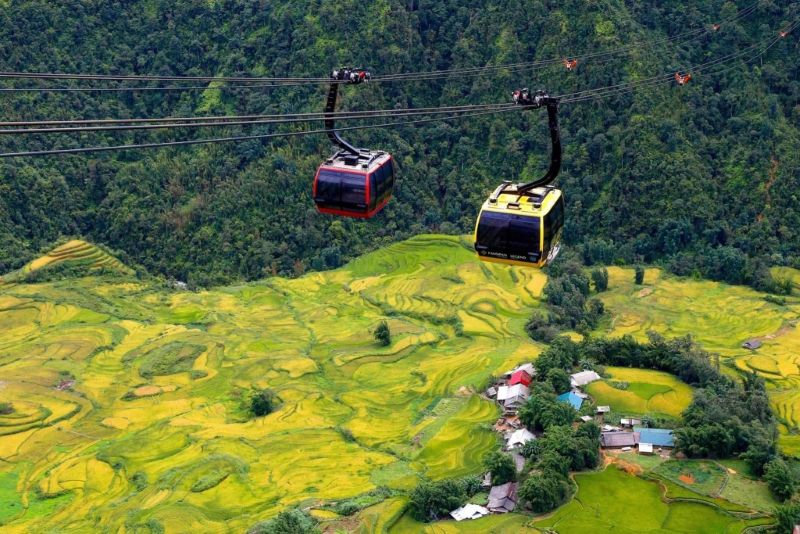
Image source: sunworld.vn
The Fansipan cable car is part of Sun World Fansipan Legend and connects Hoang Lien Station with Fansipan Station high on the mountain. The three-wire system covers 6,292.5 metres with a vertical difference of 1,368.93 metres, making Vietnam’s highest peak accessible without undertaking the mountain trek.
- Cable car journey: Around 15 minutes
- Difficulty: Easy, although some walking and stairs are involved
- Best for: Leisure travellers, families and visitors who want to reach Fansipan without trekking
- Why go: The easiest way to access Fansipan, with extensive views over the Hoang Lien Son mountains and Muong Hoa Valley when conditions are clear
However, the cable car is only one part of the journey from Sapa town to the 3,143-metre summit. First-time visitors should be aware that several stations and transport services are involved.
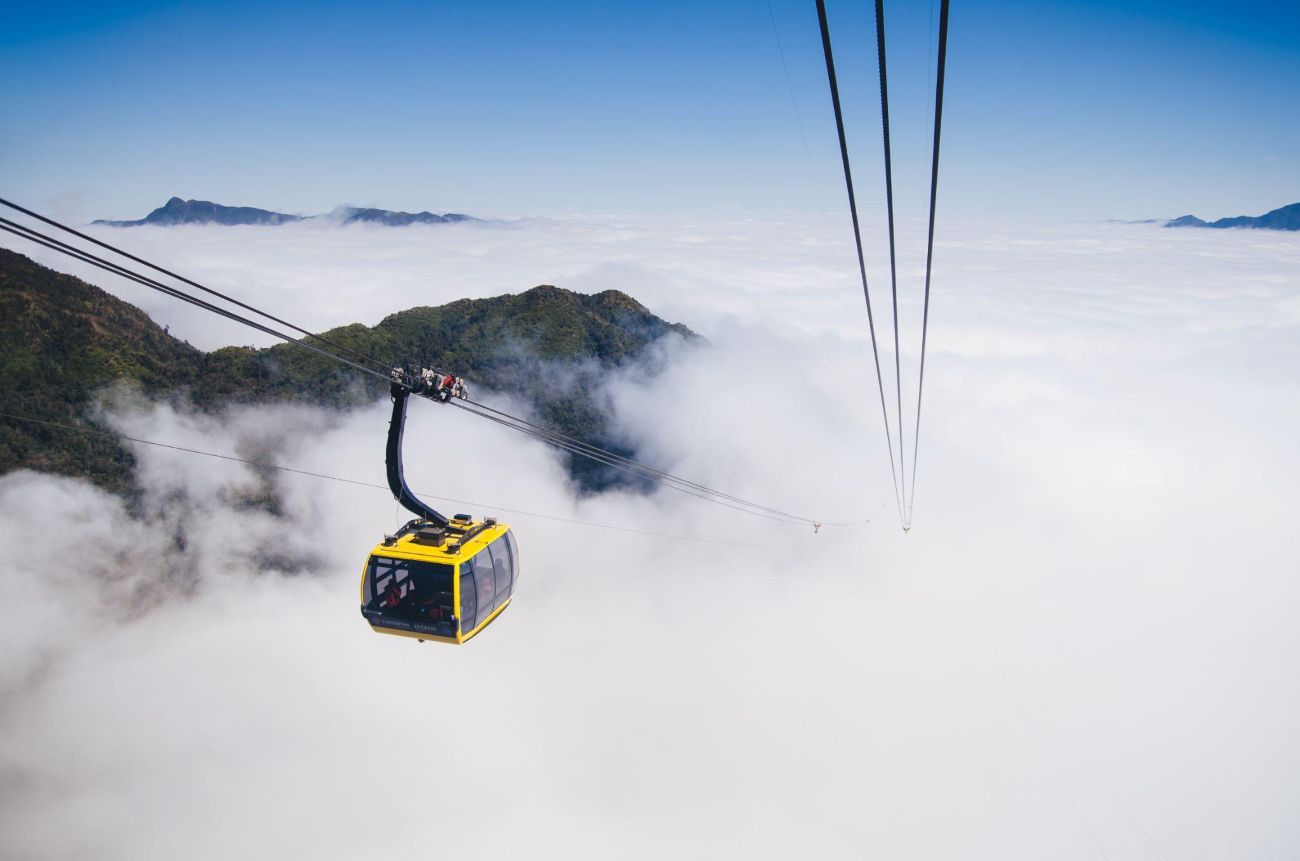
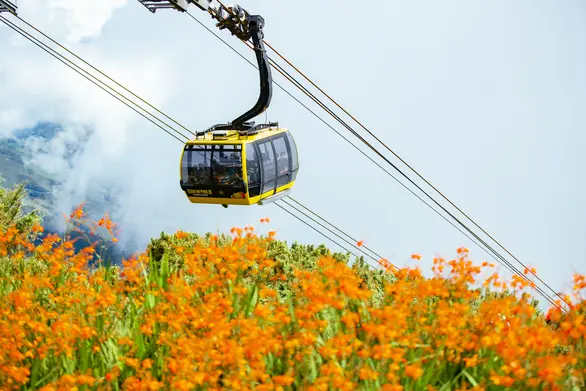
Image source: sunworld.vn
How to Get from Sapa to Fansipan Peak
The easiest way to understand the journey is:
Sapa Station → Muong Hoa mountain railway → Hoang Lien Station → Fansipan cable car → Fansipan Station → Do Quyen Station → summit funicular → Fansipan Peak
1. Sapa Station to Muong Hoa Station
Start at Sapa Station inside Sun Plaza in central Sapa and take the Muong Hoa mountain railway. The approximately 2 km journey takes around six minutes and offers views across Muong Hoa Valley, including mountains, villages and terraced fields.
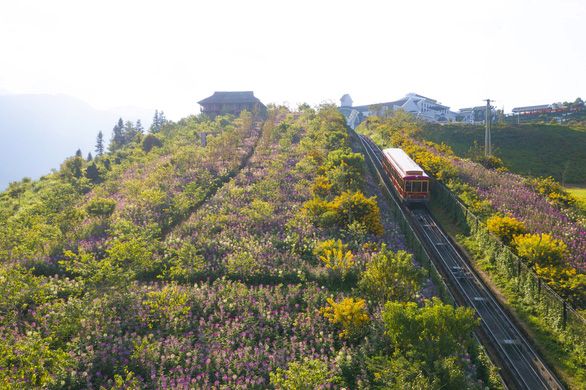
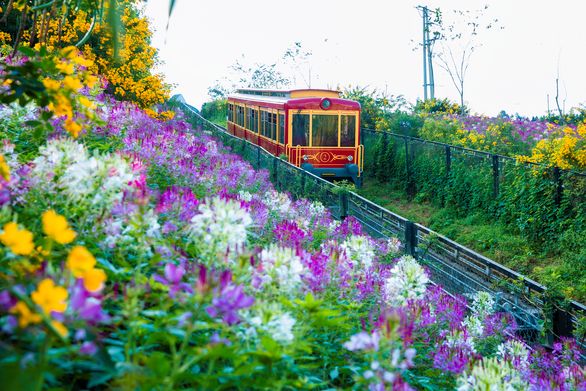
Image source: sunworld.vn
2. Muong Hoa Station to Hoang Lien Station
After leaving the railway, follow the walking route through the Sun World Fansipan Legend complex to Hoang Lien Station, where the main Fansipan cable car departs. The connection passes through landscaped gardens before reaching the cable car station.
3. Hoang Lien Station to Fansipan Station
Take the Fansipan cable car for the main ascent. The approximately 15-minute journey climbs above Muong Hoa Valley and the Hoang Lien Son mountains before arriving at Fansipan Station high on the mountain.
4. Fansipan Station to Do Quyen Station
The cable car does not finish directly at the 3,143-metre summit. After arriving at Fansipan Station, continue on foot through the upper complex towards Do Quyen Station. Đỗ Quyên Restaurant is also located around the upper cable car station, providing a place to stop before continuing towards the peak.
5. Do Quyen Station to Fansipan Peak
From Do Quyen Station, visitors have two options. The Fansipan summit funicular reduces the final climb and takes passengers closer to the summit. Alternatively, visitors can walk through the spiritual complex and climb roughly 600 stone steps towards the 3,143-metre summit marker. The walking option requires more physical effort, particularly at this altitude.
Note: The Muong Hoa mountain railway and summit funicular are separate services from the main Fansipan cable car and require separate tickets. The Muong Hoa railway is optional, as visitors can also reach Hoang Lien Station by road.
Fansipan Cable Car Opening Hours (2026)
According to the latest announcement from Sun World Fansipan Legend on March 4, 2026, operating hours vary by day, with extended hours on Fridays and Saturdays.
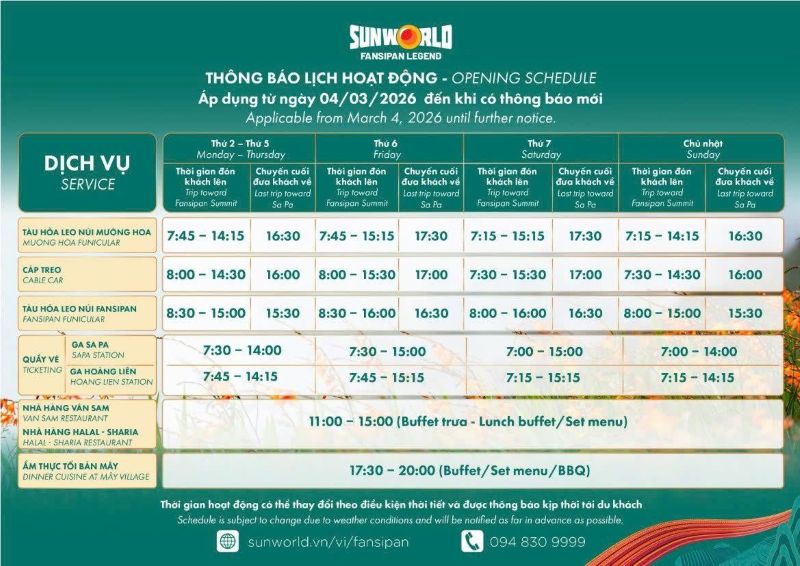
Image source: sunworld.vn
Fansipan Cable Car
- Monday–Thursday: 8:00 AM–2:30 PM; last descent at 4:00 PM
- Friday: 8:00 AM–3:30 PM; last descent at 5:00 PM
- Saturday: 7:30 AM–3:30 PM; last descent at 5:00 PM
- Sunday: 7:30 AM–2:30 PM; last descent at 4:00 PM
Muong Hoa Mountain Railway
The Muong Hoa funicular connects Sapa Station with Hoang Lien Station, where visitors board the Fansipan cable car.
- Monday–Thursday: 7:45 AM–2:15 PM; last return to Sapa at 4:30 PM
- Friday: 7:45 AM–3:15 PM; last return at 5:30 PM
- Saturday: 7:15 AM–3:15 PM; last return at 5:30 PM
- Sunday: 7:15 AM–2:15 PM; last return at 4:30 PM
Fansipan Summit Funicular
The summit funicular provides an alternative to climbing the stairs between the upper cable car station area and the summit.
- Monday–Thursday: 8:30 AM–3:00 PM; last descent at 3:30 PM
- Friday: 8:30 AM–4:00 PM; last descent at 4:30 PM
- Saturday: 8:00 AM–4:00 PM; last descent at 4:30 PM
- Sunday: 8:00 AM–3:00 PM; last descent at 3:30 PM
Important: These are the published 2026 operating hours, effective from March 4, 2026, and are subject to change. Sun World Fansipan Legend may adjust schedules due to weather conditions, maintenance, seasonal demand or other operational requirements. Travellers should confirm the latest operating hours before visiting and allow sufficient time for the return journey.
Trekking Fansipan: Reaching the Summit on Foot
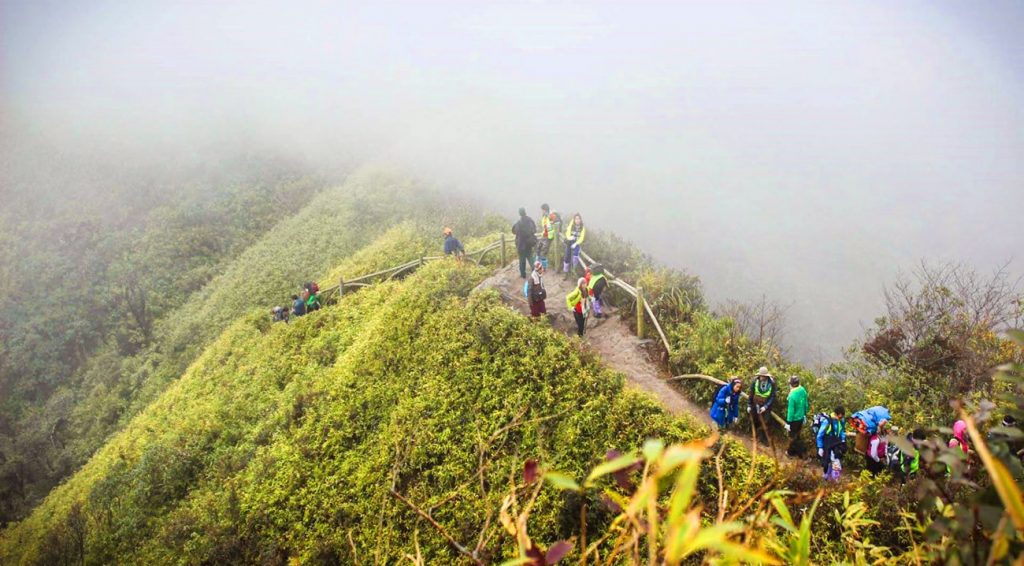
Image source: vinwonders.com
Trekking Fansipan turns the ascent itself into a major part of the experience. The three main approaches are Tram Ton, Sin Chai and Cat Cat, but they differ considerably in length, terrain and difficulty. Tram Ton is the most commonly used and accessible option, while Sin Chai offers a more demanding approach and Cat Cat is the longest and most challenging of the three.
Tram Ton Route: The Most Commonly Used Fansipan Trek
The Tram Ton route is the most commonly used way to trek Fansipan and the least demanding of the three main approaches. Starting from Tram Ton Pass, the trail climbs through Hoang Lien National Park, passing forest, streams and increasingly steep mountain terrain. Rest areas around 2,200 metres and 2,800 metres provide stopping points along the ascent.
- Distance: Approximately 10.5–11.2 km to the summit
- Duration: 1 day or 2 days/1 night
- Difficulty: The least demanding of the three main routes, but still physically challenging
- Best for: Fit travellers looking for a more established trekking route to Fansipan
- Why choose it: A higher starting elevation and a more established trail than the Sin Chai and Cat Cat approaches
2 Days / 1 Night via Tram Ton
The 2-day, 1-night trek divides the Tram Ton ascent into two stages. Trekkers typically climb to the rest area around 2,800 metres on the first day, stay overnight and continue to the summit the following morning. Breaking the journey into two days makes the pace more manageable and allows more time on the mountain.
One-Day Trek via Tram Ton
Exceptionally fit and experienced hikers can complete the Tram Ton route in a single day without an overnight stop. These programmes typically start early in the morning and require a sustained uphill effort, with limited time for extended breaks. Actual trekking time depends on fitness, pace, weather and trail conditions.
Trekkers can also hike to the summit and descend by cable car instead of walking back down. This option must be planned around the cable car’s operating hours, with sufficient time allowed for delays along the trail. The cable car descent is subject to ticket availability and operational conditions.
Sin Chai Route: Shorter but Much Steeper
The Sin Chai route is the shortest of the three main approaches to Fansipan, at approximately 9 km to the summit. Starting near Sin Chai Village at around 1,380 metres, it involves greater elevation gain than Tram Ton over a shorter distance. The trail is steep, less frequently used and can be difficult to follow in overgrown sections.
- Distance: Approximately 9 km to the summit
- Duration: Depends on the trekking programme and trail conditions
- Difficulty: Hard
- Terrain: Steep mountain trails with overgrown and less frequently used sections
- Best for: Experienced trekkers with strong fitness
- Why it is difficult: Greater elevation gain over a shorter distance, combined with steep terrain and more demanding navigation
Cat Cat Route: The Longest Approach to Fansipan
The Cat Cat route is the longest of the three main approaches to Fansipan. Beginning near Cat Cat Village at approximately 1,300 metres above sea level, it involves a longer journey through mountain terrain than the standard Tram Ton ascent.
- Distance: Varies according to the route and programme; the longest of the three main approaches
- Duration: Generally planned as a multi-day trek
- Difficulty: Very hard
- Terrain: Mountain trails with steep and rugged sections
- Best for: Experienced trekkers with strong fitness and previous mountain trekking experience
- Why it is difficult: The longer distance and sustained physical effort make it a demanding mountain expedition
Registration and Guide Rules for Fansipan Treks
The Tram Ton, Sin Chai and Cat Cat routes all pass through areas managed by Hoang Lien National Park, so trekking access is regulated regardless of which route you choose.
Travellers joining an organised Fansipan trek normally have the necessary registration and park arrangements handled by their tour operator. Current local trekking guidance also states that independent or unguided climbing is not permitted and trekkers must be accompanied by a registered guide. Travellers should therefore arrange their Fansipan trek through an authorised operator or confirm the latest registration and guide procedures directly with Hoang Lien National Park before setting out.
Fansipan Cable Car vs. Trekking: Which Should You Choose?
Choose the Cable Car If…
Take the cable car if your priority is reaching the summit area, enjoying mountain views and exploring Sun World Fansipan Legend without committing to a strenuous hike. It is a practical choice for families, older travellers and visitors with limited time in Sapa, although reaching the summit from the upper station still involves stairs or a further funicular ride.
Choose Trekking If…
Choose trekking if reaching Fansipan on foot is an important part of the experience itself. It is suited to active travellers who want to experience the mountain trails and are prepared for a physically demanding ascent. Those who prefer not to complete the long descent can also trek up and take the cable car down, provided this is arranged in advance and fits the cable car’s operating hours.
What to See Around the Fansipan Summit
Whether you reach Fansipan by cable car or trek to the summit, allow some time to explore the upper mountain rather than simply taking a photo at the 3,143-metre marker and heading back down. The area combines viewpoints, Buddhist monuments, walking routes and places to stop for food or a hot drink, so the summit visit can easily become an experience of its own.
The Fansipan 3,143m Summit Marker
The 3,143-metre summit marker is the main goal for most visitors and one of the most popular photo stops on Fansipan. On clear days, the summit provides broad views across the Hoang Lien Son range, but conditions at this altitude can change quickly. Clouds and fog can move across the mountain quickly, so reaching the summit doesn’t necessarily mean getting a clear panoramic view.
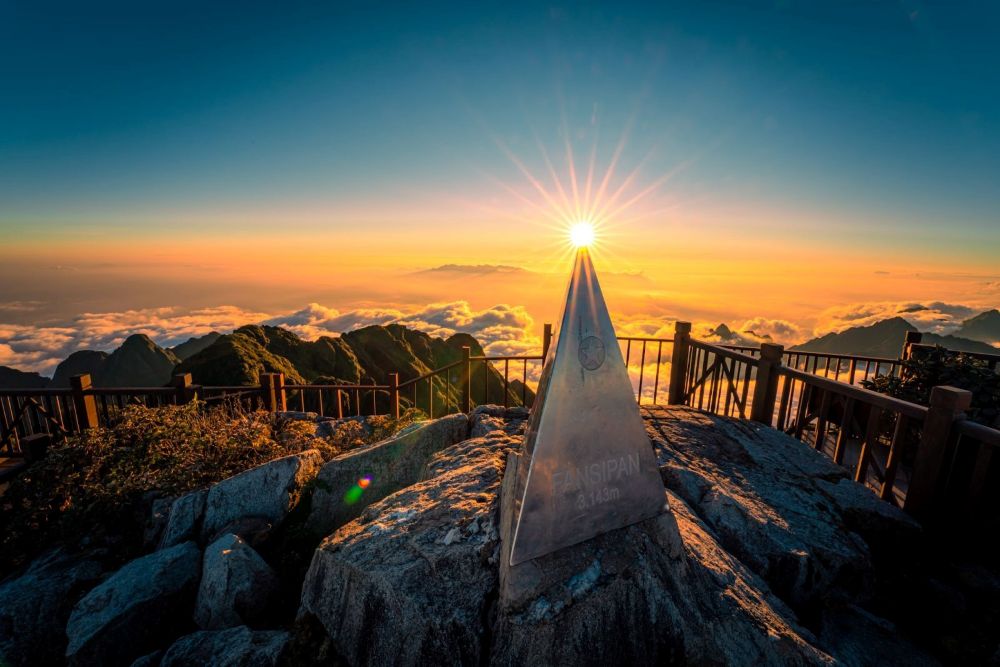
Image source: sunworld.vn
The Great Buddha and Spiritual Complex
The route through the upper mountain passes a substantial Buddhist spiritual complex rather than a single temple. Major landmarks include Bich Van Thien Tu, the Great Amitabha Buddha, the Arhat Path, and Kim Son Bao Thang Tu, along with stupas, statues, and other religious structures built across the mountainside.
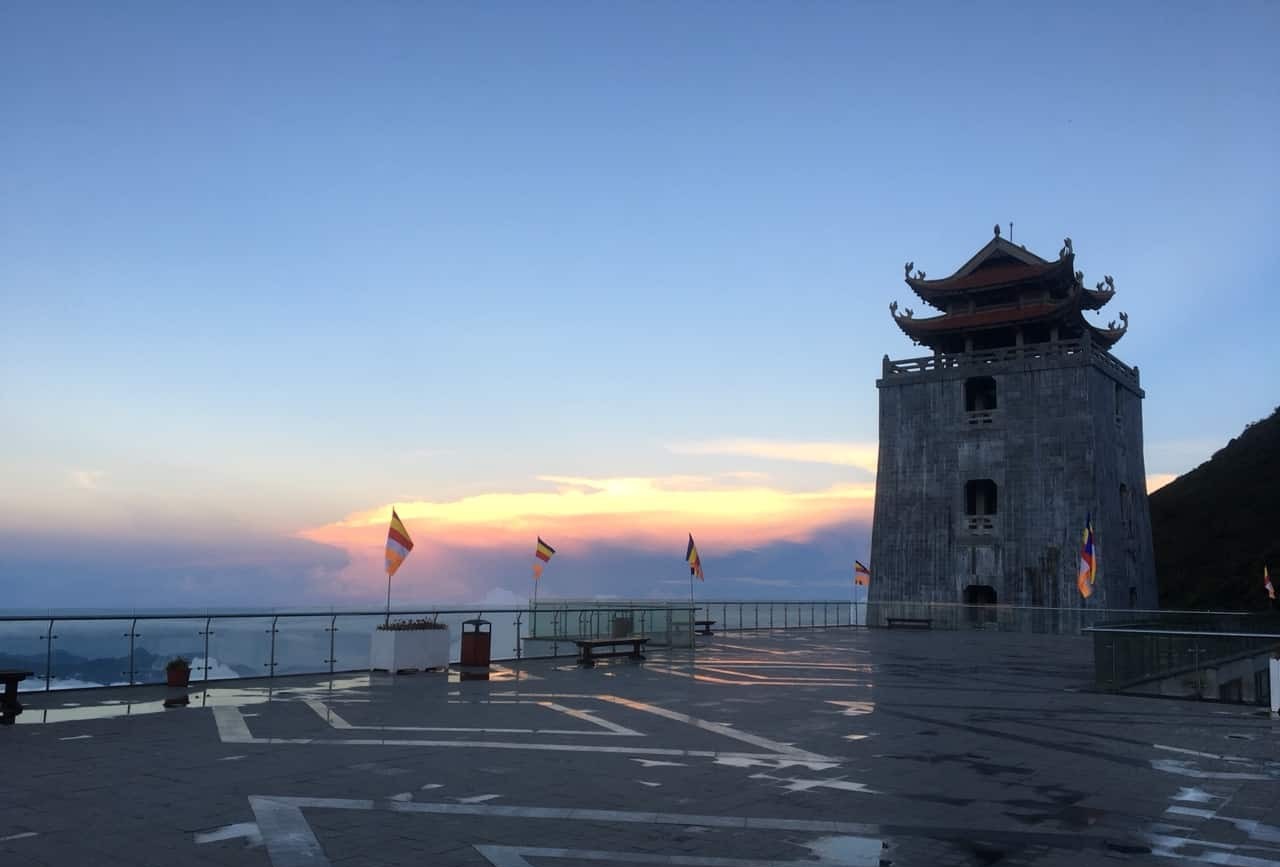
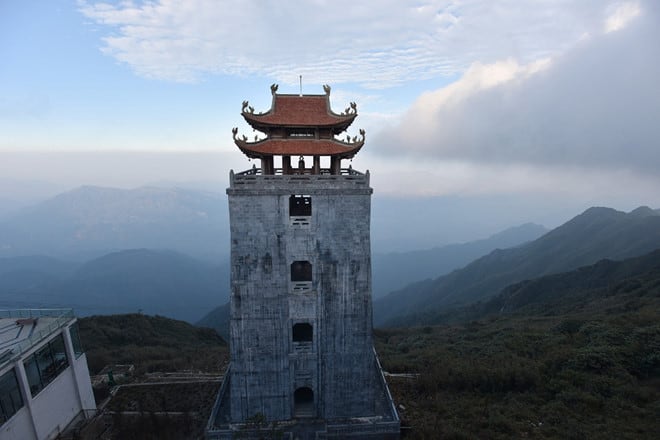
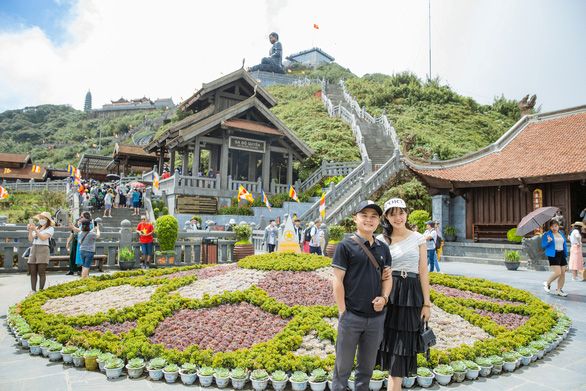
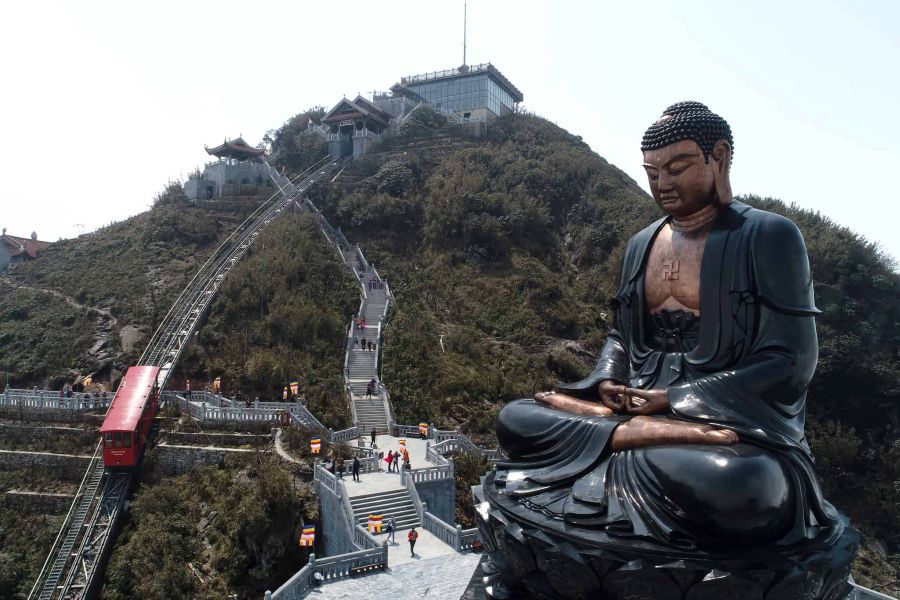
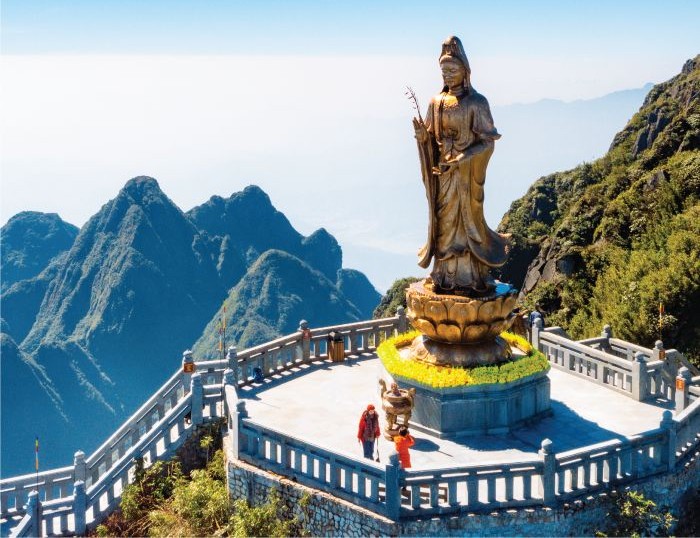
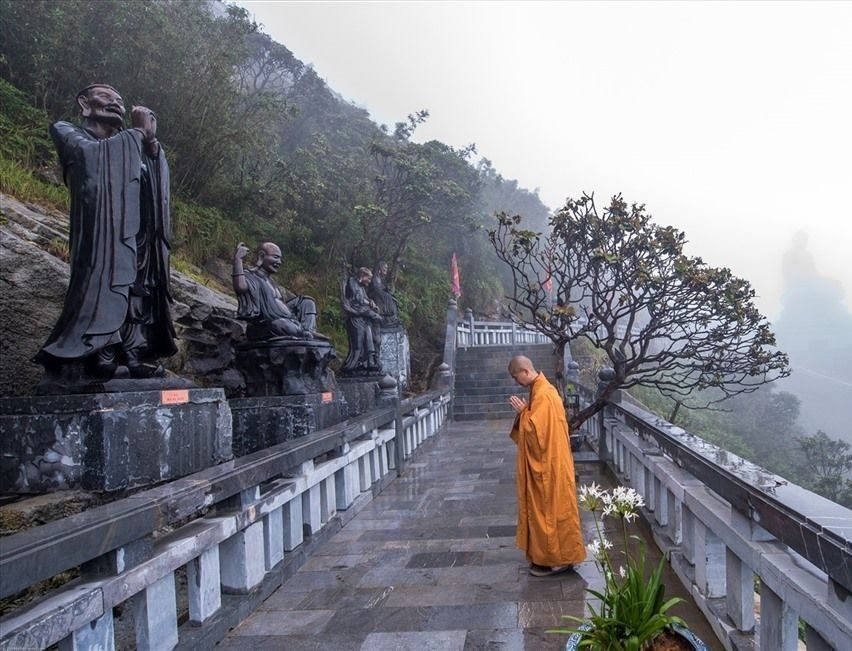
Image source: sunworld.vn
The Arhat Path alone extends for around 800 metres and is lined with 18 bronze Arhat statues and old rhododendron trees. Visitors should allow time to walk through the complex and remember that these are active religious spaces, particularly when worship or ceremonies are taking place.
Fansipan Flagpole and Mountain Viewpoints
The Fansipan flagpole is another major stop close to the summit area. Together with the terraces and viewpoints around the spiritual complex, it provides different perspectives over the Hoang Lien Son mountains and Muong Hoa Valley when visibility is good.
So there’s no need to rush directly from the cable car to the summit marker. Walking through the upper complex gives visitors several opportunities to stop, take photographs and experience the mountain from different elevations.
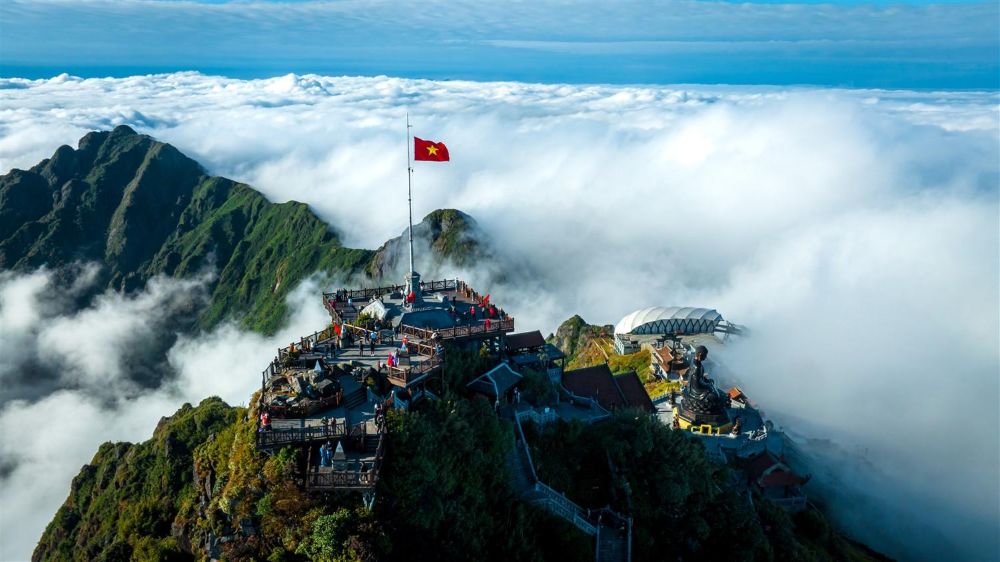
Image source: sunworld.vn
Where to Have Coffee and Take a Break
For visitors who want to warm up or simply rest before continuing, Café Du Soleil is located near the Fansipan arrival station and at the foot of the flagpole. It serves coffee, tea, hot chocolate and other drinks, with views towards the Hoang Lien Son range and Muong Hoa Valley. This makes it a particularly useful stop when the summit is cold, windy or foggy.
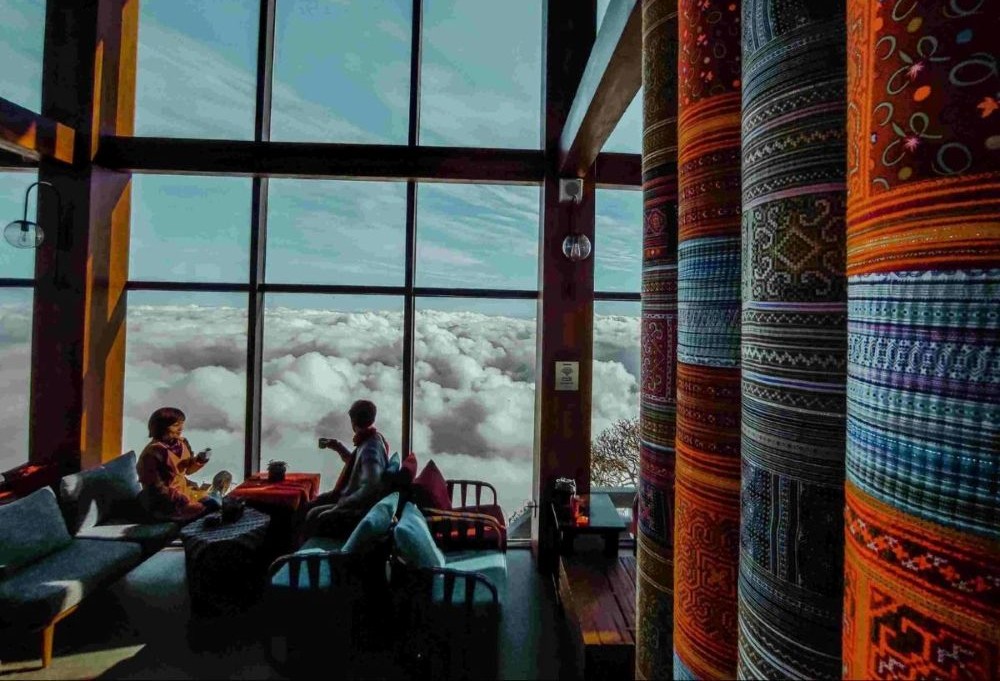
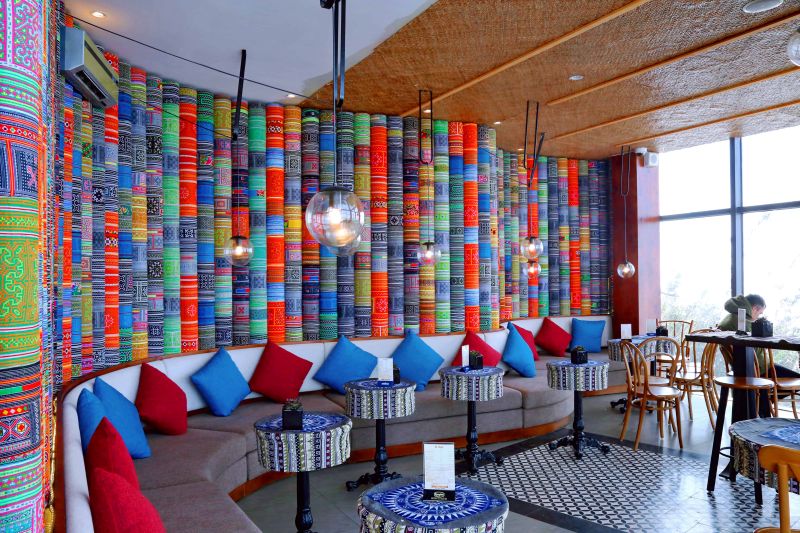
Image source: sunworld.vn
Current 2026 Sun World information also lists a Starbucks Fansipan, providing another option for coffee and drinks within the complex.
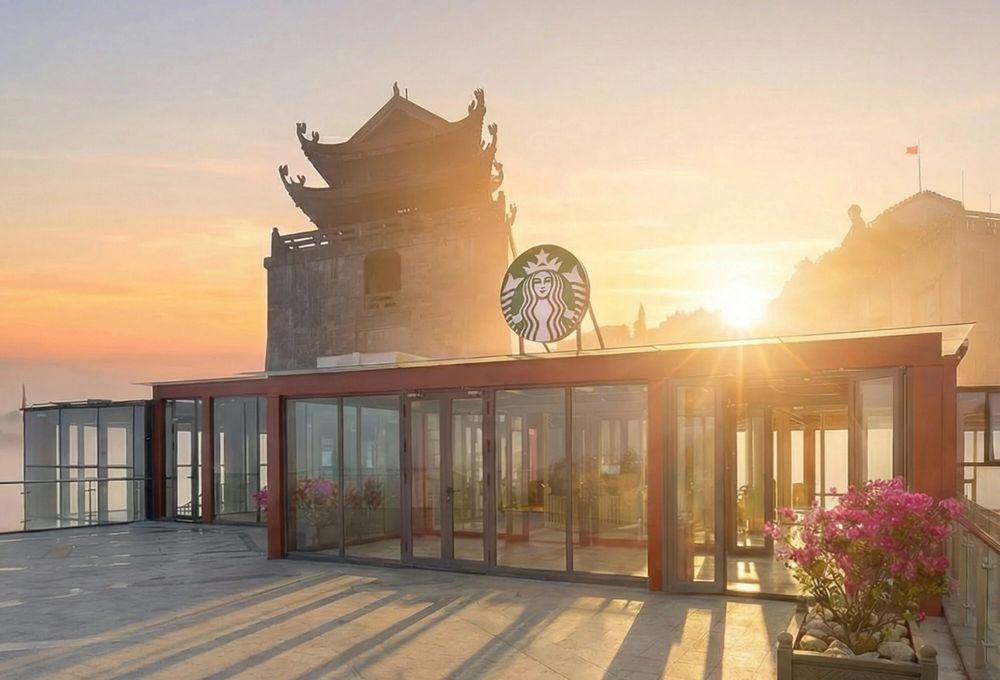
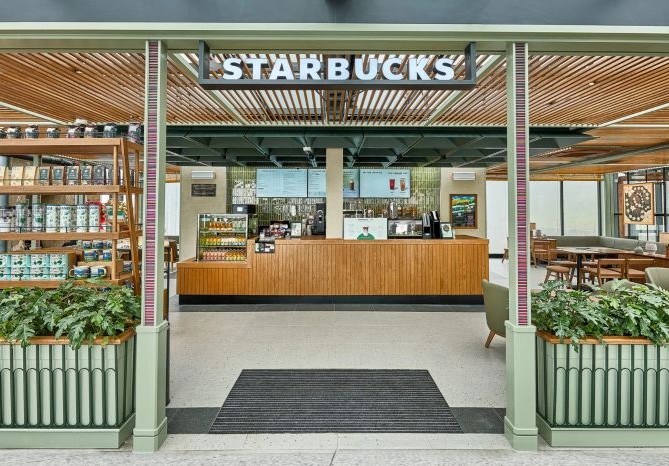
Image source: stories.starbucks.com
Where to Eat at Fansipan
Visitors do not necessarily need to return to Sapa for lunch. Sun World Fansipan Legend has several food options within the wider complex, including Vân Sam Restaurant, which serves Northwest Vietnamese dishes and has operated a buffet service. Other current dining options are available within the resort, although restaurant opening hours and services can vary. For itinerary planning, this means a Fansipan visit can include lunch or a rest stop within the complex rather than treating the mountain purely as a quick cable-car excursion.
Rhododendrons and Mountain Walks
Fansipan is also known for its rhododendrons. Near Kim Son Bao Thang Tu, a roughly 60-metre rhododendron walkway passes old trees growing along the mountainside. Rhododendrons can also be seen around the spiritual complex, Arhat Path and routes towards the summit, with flowering conditions varying by season
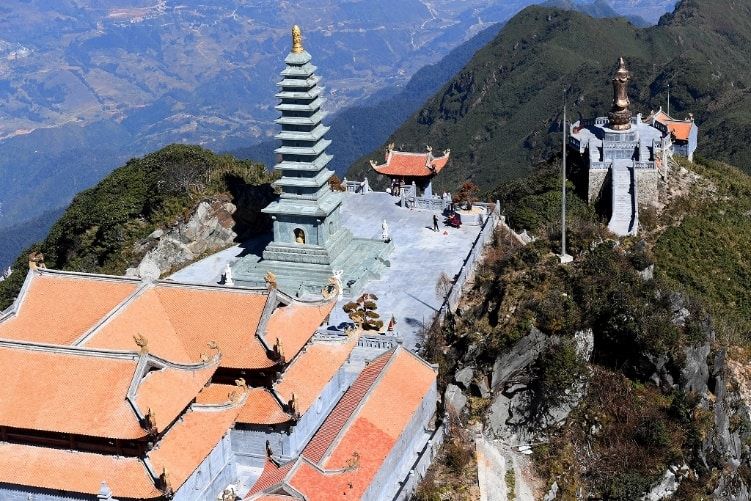
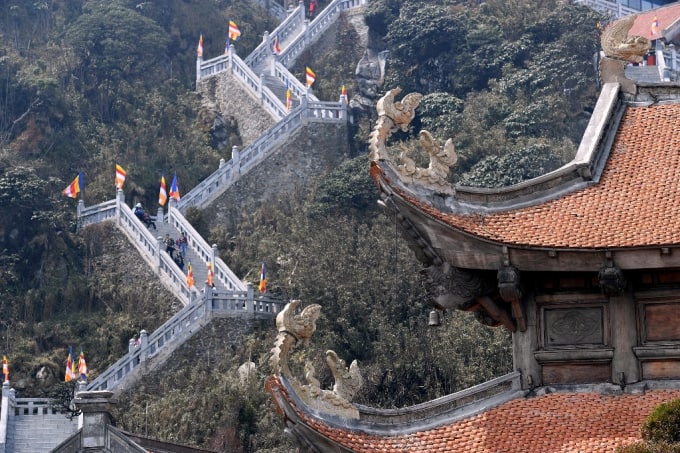
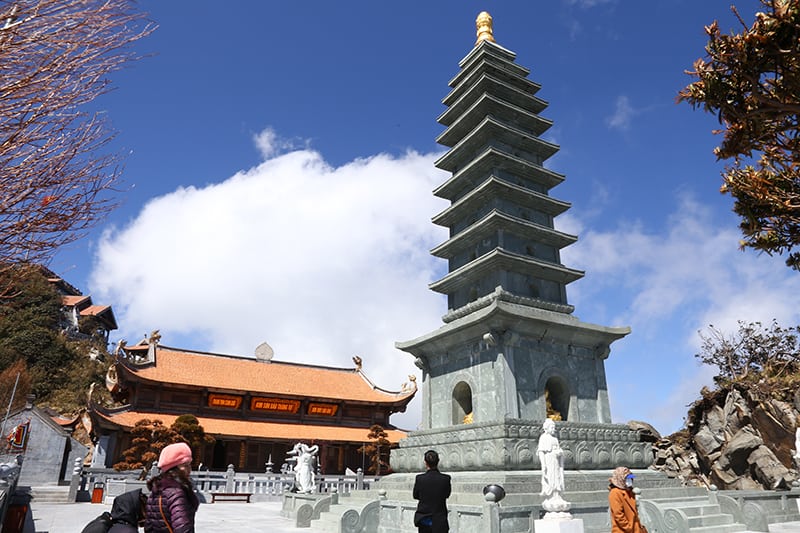
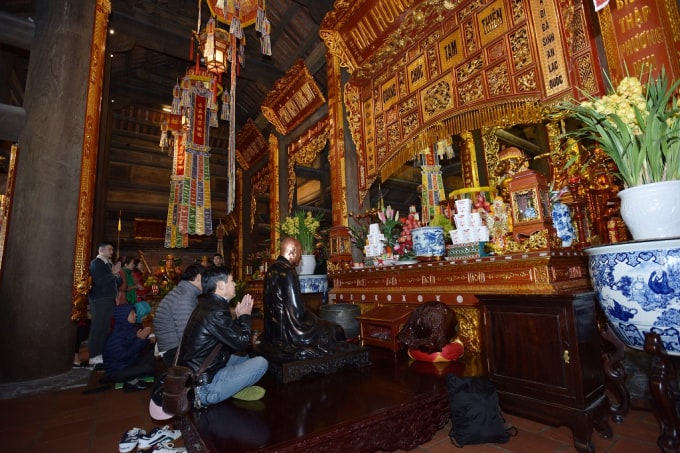
Image source: sunworld.vn
Best Time to Visit Fansipan
Unlike southern Vietnam, which generally has two main seasons, wet and dry, northern Vietnam experiences four more distinct seasons: spring from March to May, summer from June to August, autumn from September to November, and winter from December to February. Fansipan can be visited year-round, but at 3,143 metres, conditions at the summit can be much colder and more changeable than in Sapa town.
- Spring (March–May): Generally comfortable for outdoor activities, with warmer temperatures and seasonal flowers across the mountains.
- Summer (June–August): Warmer but also wetter. Rain, cloud and slippery trails can affect visibility and make trekking more difficult.
- Autumn (September–November): Often one of the most appealing periods, with cooler conditions and the wider rice terrace scenery around Sapa, particularly around September and October.
- Winter (December–February): Cold and often misty at higher elevations, with frost and occasional snow possible during particularly cold spells.
For cable car visitors, visibility is an important consideration, as cloud and fog can obscure the mountain views even when the cable car is operating. For trekkers, rainfall and trail conditions matter more because wet weather can significantly increase the difficulty of the climb.
What to Wear and Bring to Fansipan
Do not dress only according to the weather in Sapa town. Conditions near the summit can be significantly colder and windier, even when the town feels comfortable.
For a cable car visit, bring:
- Comfortable walking shoes
- A warm layer or lightweight jacket
- Rain protection
- Water
- Sun protection
- A small backpack
For trekking, preparation needs to be more substantial:
- Proper hiking shoes with good grip
- Warm, quick-drying layers
- Waterproof jacket
- Trekking poles
- Water and food according to the programme
- Personal medication and basic first aid
- Headlamp for early starts or overnight programmes
- Lightweight backpack
Trekkers should follow the equipment advice of their guide or trekking operator, particularly for overnight programmes.
Planning Fansipan as Part of a Sapa Journey
Fansipan does not necessarily need to take up an entire Sapa itinerary. How it fits into the programme depends mainly on whether travellers are visiting by cable car or trekking to the summit.
Combining a Half-Day Fansipan Visit with Other Sapa Experiences
For travellers using the cable car, around half a day is generally practical for Fansipan, including the journey from Sapa, cable car ride, summit area and time to explore the spiritual complex. This leaves part of the day available for another experience in or around Sapa.
Depending on timing and traveller interests, Fansipan can be combined with Sapa town, Cat Cat Village or a short walk in the surrounding valleys. Rather than adding too many stops, the programme should allow enough flexibility for mountain weather, transport connections and time to explore the upper Fansipan complex without rushing.
Including a Fansipan Trek in a Sapa Itinerary
Trekking requires a different approach because Fansipan becomes a major part of the itinerary rather than a half-day excursion. The Tram Ton route can be organised as a one-day trek for fit travellers or over two days with an overnight stop, while the more demanding Sin Chai and Cat Cat approaches require additional time.
Travellers should therefore allow enough time in Sapa before and after the trek, particularly for longer routes. For those who want the experience of reaching Fansipan on foot without completing the full descent, trekking up and returning by cable car can also be considered when the chosen programme and cable car schedule allow.
How ASEV Travel Can Help Your Clients
For travel agencies, the right Fansipan experience depends on the client’s fitness, available time, interests and expected comfort level. Some travellers may be best suited to a half-day cable car visit, while active clients may prefer to make Fansipan trekking a central part of their Sapa programme.
With over 30 years of experience as a DMC in Southeast Asia, ASEV Travel can help integrate Fansipan into a wider Sapa itinerary, from transport and local guides to trekking arrangements, accommodation and other experiences in the region. Contact our team to discuss the most suitable programme for your clients.
Frequently Asked Questions
Should I book Fansipan cable car tickets in advance?
Booking in advance is not always necessary, but it can be convenient during weekends, Vietnamese public holidays and other busy travel periods, when more visitors are expected. Advance booking can reduce time spent buying tickets on arrival, while on quieter days, you can generally buy tickets at the station. Regardless of how you buy your ticket, check the latest operating schedule before travelling, as cable car services can change due to weather or maintenance.
How do I get from Hanoi to Fansipan?
Most travellers first travel from Hanoi to Sapa, around 5–6 hours by road depending on traffic and transport type. Another option is the overnight train from Hanoi to Lao Cai, followed by a road transfer of around 45–60 minutes to Sapa. From central Sapa, visitors can take the Muong Hoa mountain railway from Sapa Station inside Sun Plaza to the Fansipan cable car departure area, or travel there by road.
How much time should you allow for a cable car visit?
Although the cable car ride itself takes only around 15 minutes, a Fansipan visit takes considerably longer. Allow time for the Muong Hoa railway or road transfer, cable car journey, walking between the upper attractions, the summit and the return journey. A half-day is a more realistic timeframe than planning around the cable car ride alone.
Can altitude affect you at Fansipan?
At 3,143 metres, some visitors may notice shortness of breath, tiredness, headache or light-headedness, particularly when climbing the steps near the summit. Walk at a comfortable pace, take breaks when needed and avoid pushing yourself if you feel unwell.
Can you visit Fansipan when it is cloudy or raining?
Yes, but weather can significantly change the experience. Clouds and fog may obscure the mountain views, while strong winds or severe weather can affect transport operations. Trekkers should also consider slippery trails and reduced visibility.
What’s the weather like at the summit, and is Fansipan worth visiting if it’s foggy?
Weather at the 3,143-metre summit can be very different from Sapa town, with temperatures generally around 7–10°C lower and conditions changing quickly. Even in summer, bring a light jacket, and winter temperatures can fall below freezing. Cloud and fog may obscure the panoramic mountain views, so clear visibility is never guaranteed. Fansipan can still be atmospheric in misty conditions, particularly around the spiritual complex, but travellers visiting primarily for the views should check the weather forecast before going and consider starting earlier in the day
Is the summit area accessible for young children, older travellers, or anyone with mobility concerns?
The cable car itself is comfortable and requires no walking, but reaching the actual summit marker from the upper station involves several hundred steps, some steep. Travellers with mobility limitations can still enjoy the lower viewing platforms and temple complex without attempting the full staircase to the top.
How much time should I budget for a Fansipan cable car visit?
Allow around half a day for a comfortable Fansipan visit. Although the cable car ride itself takes only about 15 minutes, you also need time to reach the cable car station, wait for services, explore the summit and spiritual complex, and make the return journey. Using the Muong Hoa mountain railway and summit funicular can also add time to the overall trip. For most travellers, Fansipan therefore works well as a half-day experience from Sapa, rather than requiring a full day on its own.
Can you trek up Fansipan and take the cable car down?
This can be possible and is used by some trekking itineraries. It should be arranged in advance and coordinated with the guide and current cable car operating schedule.